


Upper Blepharoplasty Recovery: What to Expect Before & After Surgery
Updated: Aug 16
If you're considering upper blepharoplasty, one of the biggest questions is often not "Will it work?" but "What will the experience actually be like?"
How long will your eyes be swollen? When can you return to work? Will the surgery hurt? When will the scars fade? And when will you finally see the result?
Upper blepharoplasty is a relatively focused procedure, but the recovery process is an important part of the overall experience. Understanding what happens before, during and after surgery can help you prepare properly and have realistic expectations.
At Donnybrook Clinic, upper blepharoplasty consultations with Dr Sami Hameid consider both the appearance of the eyelids and any functional concerns, including potential visual obstruction.
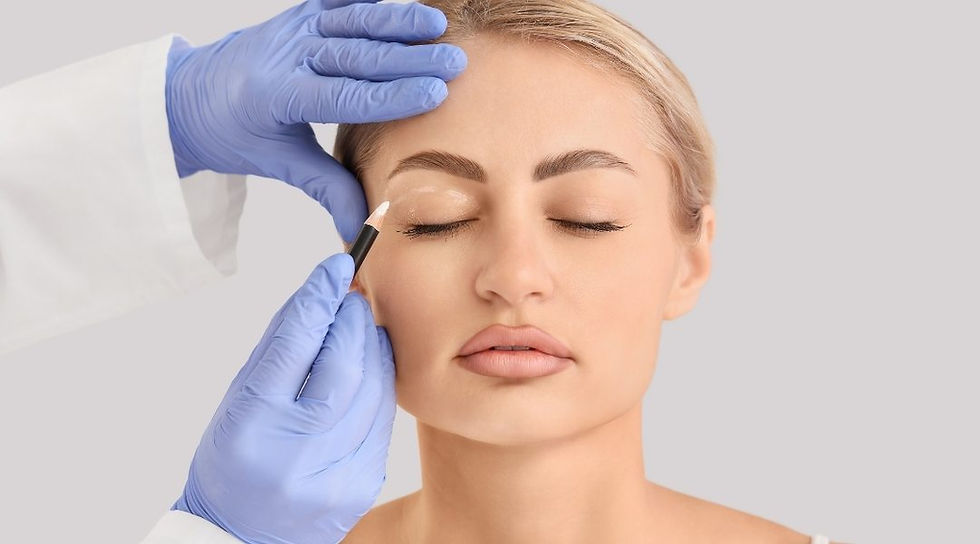
Before Surgery: What Happens at Your Consultation?
Your consultation is an important part of the process because heavy or hooded eyelids can have different causes.
Excess upper eyelid skin may be responsible for the appearance of hooding, but brow position, eyelid structure and other factors can also influence how the eyes look.
During your consultation, your eyelid anatomy, eye health, facial balance and individual concerns can be assessed before deciding whether upper blepharoplasty is appropriate.
You'll also have an opportunity to discuss what you would like to change and what you can realistically expect from surgery. The goal isn't to create a completely different eye shape. A well-planned procedure should complement your existing features.
What Happens on the Day of Upper Blepharoplasty?
Upper blepharoplasty involves carefully removing excess skin from the upper eyelid. Where appropriate, the underlying tissue or small pockets of fat may also be addressed.
The incision is positioned within the natural upper eyelid crease, helping keep the resulting scar discreet as it heals. The procedure is focused on removing enough tissue to improve the appearance or function of the eyelid without creating an over-corrected result.
At Donnybrook Clinic, the procedure typically takes around 45–60 minutes, depending on the individual treatment plan.
The First Few Days: What Does Upper Blepharoplasty Recovery Feel Like?
The first few days are usually when swelling and bruising are most noticeable.
Your eyelids may feel:
Swollen or tight
Tender
Bruised
Sensitive
Slightly uncomfortable
This is a normal part of the healing process. The appearance of your eyes during the first few days is not an indication of your final result.
Keeping your head elevated and following your surgeon's aftercare instructions can help support recovery. Your individual instructions will depend on your procedure and circumstances.
Upper Blepharoplasty Recovery: A Week-by-Week Guide
Days 1–3
Swelling and bruising are generally at their most noticeable. Your eyes may feel tight and you may prefer to rest rather than return to your normal routine. Cold compresses may be recommended during the early recovery period, depending on your surgeon's instructions.
Around One Week
Sutures are generally removed after approximately 5–7 days.
Bruising should begin to improve, although some discolouration and swelling may remain.
This is often the point at which patients feel much more comfortable being seen socially, although everyone heals differently.
Weeks 2–3
Most of the obvious bruising should have settled, while residual swelling continues to improve. The eyelids begin to look increasingly natural, but they may not yet represent the final result.
Weeks 6–12
The eyelid contour continues to refine as the tissues settle. The incision also becomes progressively less noticeable.
The healing process doesn't necessarily end when the bruising disappears. Subtle changes can continue for several months.

When Can You Return to Work?
There isn't one recovery time that applies to everyone. Someone working from home may feel comfortable returning relatively quickly, while someone who works face-to-face with clients may prefer more time for bruising and swelling to settle.
Many people take approximately one to two weeks away from work, although some may return sooner depending on their recovery and occupation. Your surgeon will advise you when it is appropriate to resume work, driving and other normal activities.
When Can You Exercise After Eyelid Surgery?
Strenuous exercise and activities that significantly increase blood pressure are generally restricted during the early recovery period. This is because excessive exertion can increase swelling and potentially interfere with healing.
Rather than following a fixed timetable, return to exercise according to your surgeon's specific instructions and how your recovery is progressing.
When Can You Wear Makeup Again?
Eye makeup should be avoided while the incisions are healing. Your surgeon will tell you when it is safe to resume cosmetics around the eyes. Waiting until the incision has adequately healed helps reduce irritation and the risk of infection.
This is one reason why planning some time away from important events can be useful when scheduling surgery.
When Will the Scars Fade?
Upper blepharoplasty scars are positioned within the natural eyelid crease, where they are designed to be discreet. Initially, the incision may look pink or more noticeable. As it heals, the scar generally becomes less visible. Scar maturation takes considerably longer than the initial recovery. Even when swelling and bruising have disappeared, the incision can continue to refine over subsequent months.
Individual scar healing varies, so following your surgeon's aftercare advice is important.
When Will I See the Final Result?
It's important not to judge your surgery too early. Your eyes can look noticeably different once the initial swelling begins to settle, but the final contour takes longer to develop.
The eyelids continue to settle over the following weeks and months, with the final appearance becoming increasingly refined as healing progresses.
The result should ultimately look like your eyes, but more refreshed and less weighed down by excess skin.
How Long Do the Results Last?
Upper blepharoplasty removes excess skin rather than simply temporarily tightening it, so the improvement is long-lasting. However, surgery does not stop the ageing process. Skin elasticity and the tissues around the eyes will continue to change naturally over time.
This is why it is more useful to think of upper blepharoplasty as providing a long-term improvement rather than a permanent freeze on the ageing process.

Can Upper Blepharoplasty Improve Vision?
In some patients, yes. Excess upper eyelid skin can extend into the peripheral visual field and interfere with vision. In these circumstances, upper blepharoplasty may have a functional benefit in addition to its cosmetic effect.
However, simply feeling that your eyelids are "heavy" doesn't automatically mean that surgery will improve your vision. Functional impairment needs to be assessed clinically.
What About Risks and Complications?
As with any surgery, upper blepharoplasty has potential risks. Swelling and bruising are expected during recovery, while other possible complications can include infection, bleeding, dry or irritated eyes, asymmetry, scarring and difficulty closing the eyes.
More serious complications affecting vision are uncommon but should be discussed as part of your consultation.
Understanding both the benefits and potential risks allows you to make an informed decision rather than viewing eyelid surgery simply as a cosmetic treatment.
Questions to Ask Before Booking Upper Blepharoplasty
Before deciding to proceed, it can be useful to ask:
What is causing my upper eyelid hooding?
Am I suitable for upper blepharoplasty?
Could my brow position be contributing to the appearance?
What will my recovery realistically look like?
How long should I take off work?
Where will the incisions be placed?
What can I realistically expect the result to look like?
What are the potential risks for me?
What aftercare and follow-up will I receive?
A good consultation should give you clear answers to these questions rather than simply focusing on the procedure itself.


Comments